Showing posts with label conservation. Show all posts

An Appreciation of Muhly Grass

Muhly grass makes a nice border planting.
It's attractive even when it's not in full bloom.
Muhly grass (Muhlenbergia spp.) is one of the most popular native grasses in Florida and other places in the Southeastern US and you can see why. Its gorgeous pink flowers in late fall certainly stand out in the landscape. It's also known as sweetgrass, which has been used for coiled basketry, particularly in the "low country" of South Carolina, Georgia, and northeast Florida, by people of the Gullah Culture.

It likes dry soil in full sun or partial sun. It can be trimmed back in the late winter if there is a real need for neatness, but it's not necessary, because it tends to itself with new growth totally covering the old stalks.


It's most widely sold as just Mulenbergia capillaris, but there are actually three varieties of this species.
The range of all the native muhlys
M. capillaris var. capillaris or  hairawn muhly
M. capillaris var. filipes or gulf hairawn muhly
M. capillaris var. trichopodes or cutover muhly

The other species native to Florida is M. schreberi or nimblewill muhly.

Any of these are good choices for your landscape, but if you have a choice, choose one with its native range surrounding your location. See the Mulenbergia genus page on The Florida Plant Atlas to see the various ranges, but all the species and varieties pretty much cover the state.

Muhlenbergia was named after one of the first early-American scientists, Gotthilf Henry Ernest Muhlenberg (1753-1815). He became interested in botany while hiding from British soldiers during the Revolutionary war.

Multiply by dividing


I needed to move a big clump of muhly grass that was getting too close to a Yucca plant as both the yucca and the grass had expanded. So it was time to multiply by dividing.

After digging out the whole bunch of grass, I grabbed sections of the plant and gently pulled them from the bunch.You could separate them down to single plants, but I planted these bunches so they'd make a bigger impact in the landscape sooner. 

Spread the roots out as far as possible in the planting hole.
 Don't plant them too deep, but place the root junction
just below the soil level.
When planting the new clumps of muhly grass, it's best to clear the area and then scrape out a shallow but wide planting hole, so you can spread the roots out in every direction. Cover the roots with soil and pat down so the grass is stable. Add about an inch of mulch on top  of the soil. Irrigate liberally after planting and for the next several days. Then gradually cut back on the watering over the next few weeks.

The grass may flop over since it was use to being in a larger bunch, but as long as it's vertical at its base, it should be fine and as new shoots grow, they will have the necessary stiffness to stand up on their own.


Newly planted grass bunches. Note: that I alternated them so they'd not be in a straight line.
A fence used to run along this side of this bed, but now that it's gone, having more muhly grass along this street-side edge will give a more finished look. You may recognize this bed from a previous post "When you plant a tree, you believe in tomorrow." I'd planted a red maple at the end of this peninsular bed out into the lawn to provide a better anchor--again since the fence is gone, the bed needed more of a reason to be here.

Muhly grass gallery


Muhly grass and rice-button asters (Symphyotrichum dumosum) bloom at the same time in the fall. While I'd planted the grass, the asters planted themselves.

The troublesome areas next to and under fences is solved beautifully by muhly grass.

The emergence of the pink inflorescences is always entrancing

Pink haze!

I hope you have or will plan to have more muhly grass in your landscape.

Green Gardening Matters,
Ginny Stibolt

All-American landscape filled with natives

What could be more patriotic than a native landscape that supports Mother Nature??

Belfast castle garden is an example of a non-native and
unsustainable landscape. This is NOT authentic to America.
For far too long, the standard landscaping in our country has ignored the plants that belong here. Maybe it's a throwback to the European upper class castles where impossibly maintained formal gardens and the most exotic plants showed how much wealth they had. This landscape style is not only difficult to maintain, it's also not authentic to America.

It's time for a more patriotic approach...

The All-American Landscape
filled with regionally authentic plants 


Why is this patriotic?
The simple answer is that we need many different plants to provide habitat for butterflies, birds, and other wildlife. More to the point, diversity is important for the health of the region's overall ecology. Far too many of our wild areas have been destroyed to make room for that most damaging crop springing up with increasing frequency: McMansions and their vast lawns. 

This is a huge issue, so what difference can gardeners make? Little by little, one-by-one, we have the power to effect dramatic results. We can enhance the diversity in our own neighborhoods by:

- selecting a wide variety of native plants for our landscaping needs, and demand native species when we deal with nurseries.
- choosing plants suitable for the various microclimates on our properties so we use fewer resources, especially water, to maintain them.
- creating wild or near wild spaces on our properties and keep your cats and dogs out of this space. (Pets are subsidized predators that significantly alter the balance in the ecosystem.)
- encouraging your neighbors to do the same.

So let's get started!

Some posts for further reference:

Getting started with native plants in Florida
Florida Natives for your landscape
What?? Native plants not pretty enough...

Some patriotic natives from our yard...

Florida scrub scullcap (Scutellaria arenicola)Loblolly Bay (Gordonia lasianthus) blossoms
 rival magnolias for showiness
Pink! can be a patriotic color when it's the Muhly grass (Muhlenbergia capillaris) blossoms.

Native milkweeds support monarch butterflies and many other pollinators.
This one is the pinewoods milkweed (Alsclepias humistrat
Rain lily (Zephyrantes atamosca)Indian blanket (Gaillardia puchella)

Tropical sage (Salvia coccinea) supports not only insect pollinators, but also hummingbirds.Spanish bayonet (Yucca aloifolia)

Creating a better world is NOT for nothing; it's for our grandchildren.Green is the new red, white & blue.
So celebrate the 4th of July, but after the long weekend, continue your patriotism with more natives in your landscape and soon your landscape will be a patriotic, All-American landscape that supports the All-American wildlife native to your area.

Green Gardening Matters,
Ginny Stibolt

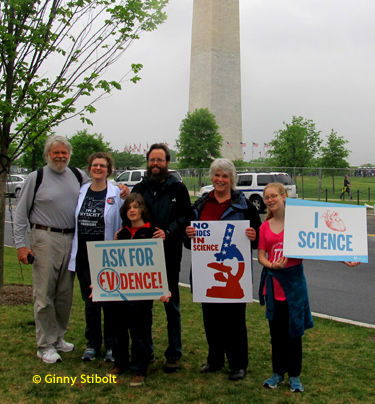
The March for Science

Ready to go

I had scheduled a trip north for several reasons including an event at UMass in Amherst on April 29th. So I extended the trip to include the March for Science in Washington, DC. I have friends and family there so this was a logical stopping place for a couple of days.  I had a "There is No Planet B!!" sign made and I dug out my old lab coat from my days as a botany grad student--I'd embroidered it with plants including a fern up the back, so I'd kept it all these years for some reason, so now I know its real purpose. :-)

Here are some of the photos I took of the event. It was misting in the morning but it was supposed to start clearing around noon. It did not; it rained harder and at times quite hard, but the weather did not scare too many people away. Fortunately, I'd carried my poncho.


Family ScienceWith my new friend, Deb from Gainesville, FL

Knitting while listening to speakers is efficientThe Lorax speaks for the trees.

Huge crowd!

The Plight of the bumble beesBlack girls scientists

Plant milkweed for the monarchs

On the march, many people stopped at the EPA building to show supportScience hats!

The light bulb on his hat turned on & offAs the world turns: Break the cycle Rise Above, Focus on Science
& on her leg "Support truth Support Science 

Whether you are right wing or left wing, you need entomologists

Science Creates new technology, Finds cures, Improves agriculture,Reveals the unimaginedBeaker stands up for science (I am a member of the Union of Concerned Scientists.)

I march for chemistry periodicallyHypothesis & conclusion. Science can't be stopped.

It's getting HOT in here...Plant Peace & The Environment comes first

Eradicate more diseases ~ Fund Science! On her hat were models of disease-causing germsExtinction is a disaster; prevent it thru science

Make Earth Cool again & There's no place like homeDinosaurs probably thought that they has plenty of time, too!

The march ended at the capitol.
I was on my feet from 9am to 4:30pm, mostly in the rain. It was a really long day, but in seeing and talking to such a great diversity of people interested in supporting science, I'm optimistic for our future.

Please do what you can to support science from letting your representatives know that you think it's important to actively working to improve the planet. Gardening may not seem so important, but just remember that for every pound of food that you grow, you save 2 pounds of greenhouse gas emissions. The potential for urban household vegetable gardens to reduce greenhouse gas emissions

Green Gardening Matters,
Ginny Stibolt

7 Action Items to support Mother Nature in 2017

Many people in our country and elsewhere, including me, are worried about environmental issues because our incoming administration our country is filled with climate change deniers and those who think science is something you can choose to believe in or not. But now is NOT the time to wring our hands and wait to see what happens. Here are 7 ways to take action to help our Mother Earth: Do it today!

There is NO Planet B!

We don't have time to spare, so now is the time to act. 
Mother Earth is our ONLY Planet: Treat with care.We must think of future generations and do better at preserving what is left of public lands and work at restoring spent lands.


Yes, we can plant more natives on our own non-poisoned properties.
A ragged gulf fritillary sips nectar from my tropical sage 

1) Start with your own landscape

Stop the lawn poisons and reduce your lawn acreage. Stop the wasteful cycle of seasonal decorative plants: replace them with native plant groupings that support birds and butterflies. Add shade to your landscape to reduce your electricity use. And so much more.

This has been the focus of much of my writing for the past decade. In addition to my books shown in the left border here, I've written hundreds of articles; links to most of them are on my Green Resources Page.

In addition to your own actions to be greener in your landscaping and life style, here are some environmental groups that are making a difference in several ways. Each one I've listed has a different emphasis, so support the ones you feel most aligned with. Because of the political situation, this year, I've made extra donations to my usual environmental groups and have added a few more organizations to support. If we work together, we're stronger. Please join me in making an extra effort on behalf of our beautiful planet.

2) Join a local native plant society 


In Florida we have the Florida Native Plant Society 

We should plant as many natives as possible for many reasons. Some important reasons are: to reduce the need for extra irrigation, to better support native wildlife, and to create landscapes that are authentic for our regions. When you join and become active in your native plant society, you'll be helping with their work to reach out to more people and to continue their research efforts on native plants and native ecosystems. Read my post "Why I love the Florida Native Plant Society" for more information.

50% of the royalties for "The Art of Maintaining a Florida Native Landscape" are paid directly to FNPS.

There are native plant societies in most states. When you join or renew your membership, please add an extra donation this year.

2) Become a member of The Nature Conservancy 

The Nature Conservancy, Florida works hard to buy up and preserve open lands in Florida.
The Nature Conservancy is the largest and probably most well-known and well-rated environmental organization. I've been a member for more than 2 decades and 50% of the royalties for "Sustainable Gardening for Florida" are paid directly to TNC, Florida. This was my mother's favorite charity because, in her words, "They don't just argue; they actually buy and manage lands that need to be preserved."

Here is a link to their Annual report for 2016.

3) Join or donate to The Audubon Society. 

The Audubon Society is a huge international organization filled with people who care about birds. Each year, they hold an annual Christmas bird count that has documented the decline of many bird species over the decades. Read a piece I wrote "Can the birds count on you?"

Audubon Florida has many programs and actions that work to preserve bird-friendly habitat within our state. 

If the birds are happy, so is Mother Nature.


The National Parks Foundation.

4) Donate to the National Park Foundation

Our National Parks are America's BEST idea! They began more than 100 years ago under President Teddy Roosevelt.

The National Park Foundation is the official charitable partner of the National Park Service. This partnership
enriches America’s national parks and programs through private support, safeguarding our heritage and inspiring generations of national park enthusiasts.

Chartered by Congress in 1967, the National Park Foundation is rooted in a legacy that began more than a century ago, when private citizens from all walks of life took action to establish and protect our national parks. Today, the National Park Foundation carries on that tradition as the only national charitable nonprofit whose mission is to directly support the National Park Service.

The Environmental Defense Fund
works in many ways and on many levels.

5) Donate to The Environmental Defense Fund

Environmental Defense Fund’s mission is to preserve the natural systems on which all life depends. They work guided by science and economics to find practical and lasting solutions to the most serious environmental problems.

They work to solve the most critical environmental problems facing the planet. They work in areas that span the biosphere: climate, oceans, ecosystems and health. Since these topics are intertwined, solutions take a multidisciplinary approach. EDF works in concert with other organizations — as well as with business, government and communities — and avoid duplicating work already being done effectively by others.


6) Join The League of Conservation Voters

League of Conservation Voters
"The League of Conservation Voters (LCV) works to turn environmental values into national, state and local priorities. LCV, in collaboration with our state LCV partners, advocates for sound environmental laws and policies, holds elected officials accountable for their votes and actions, and elects pro-environment candidates who will champion our priority issues."


7) Find other environmental groups

There are many more groups that you might like to support including 1000 Friends of Florida, Greenpeace, The Sierra Club, Earth Justice, and many more. Find groups that you feel comfortable backing and while money is an urgent need, volunteers are what really makes a group work effectively.

Charity Navigator rates charities for effectiveness and for how much of their donations actually goes to their charitable work. This link is a list of environmental charities.
Think of your grandchildren.
Be good to Mother Nature today


Past end-of-year posts:


2015: A greener 2016 and into the future
2014: 6 easy ways to save time and money
2013: 6 easy steps to support wildlife in 2014


I wish you and yours a happy, green, and prosperous 2017.

Green Gardening Matters,
Ginny Stibolt